ATR
ATR 42/72
Your answers
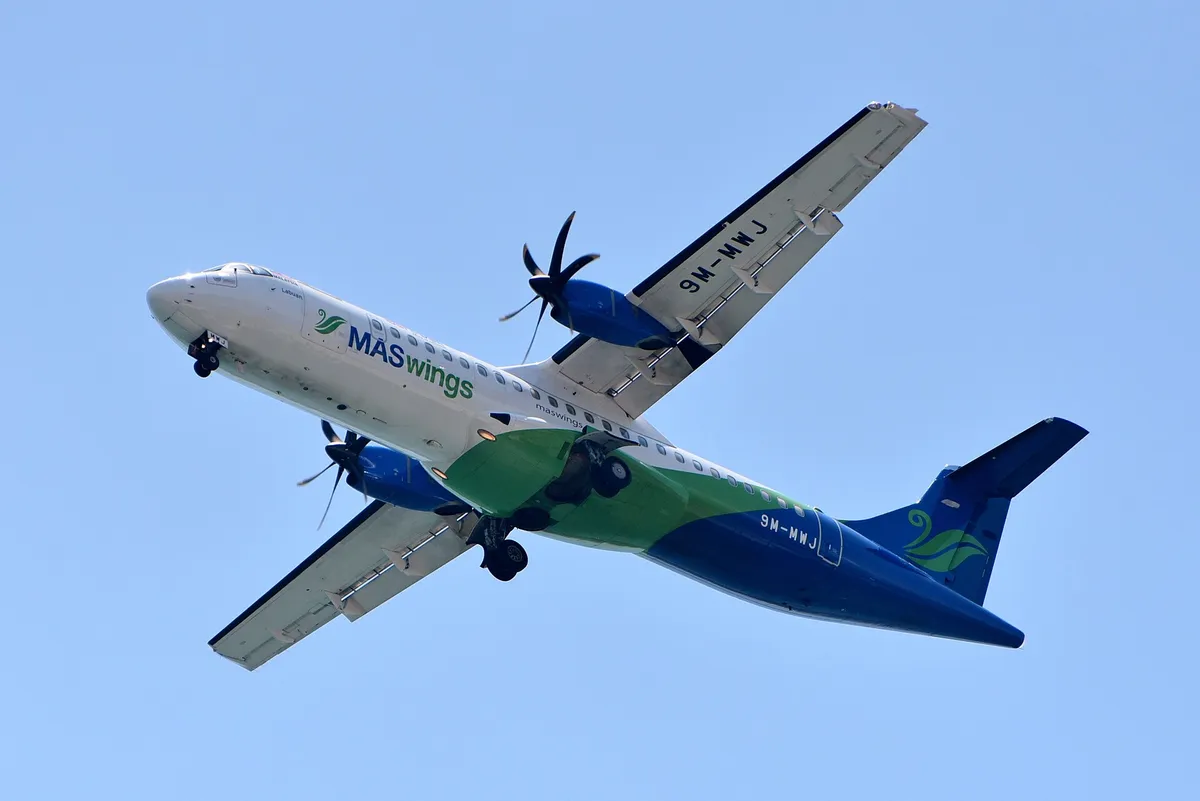
From below
The view you'll actually get from high overhead.
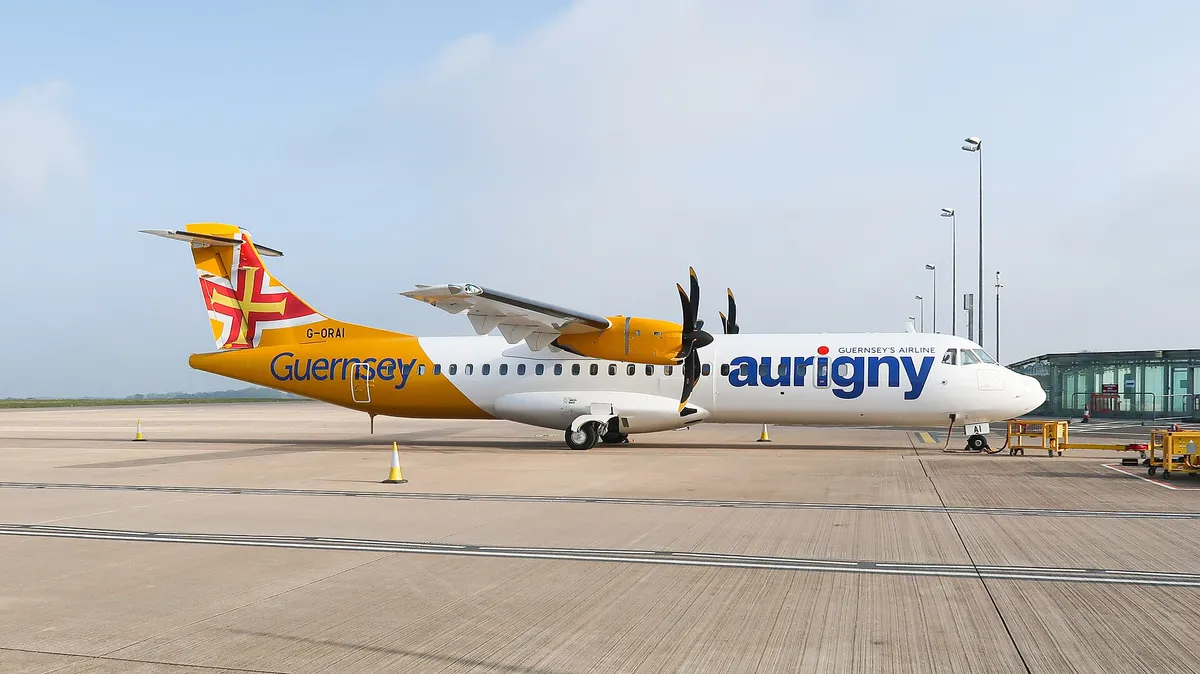
Field marks
- High wing, T-tail, and visible spinning propellers rule out every regional jet at a glance — the props vs. jets split is the first thing to check
- Boxier, stubbier body than a Dash 8 Q400, with the rear of the body sweeping up more sharply behind the wing
- The nose landing gear retracts into an open, unfaced bay with no gear doors — a small but reliable ATR tell up close
- Noticeably shorter and slower-looking than a Q400, with smaller propellers turning at a visibly lower tempo
Specs
- Length
- 27.17 m
- Wingspan
- 27.05 m
- Engines
- Pratt & Whitney Canada PW127
- Typical seats
- 40–78
Size and shape, to scale
Photos can't hold a consistent scale from shot to shot — these silhouettes are all drawn at the same 10 px = 1 m scale, so the proportions here are trustworthy even though the photos above aren't.
Variant notes
- The ATR 72 (27.17 m) is the more common variant worldwide and the one this entry's specs represent; the ATR 42 (22.67 m) is a noticeably shorter, older-market sibling
- One of the most numerous turboprops flying globally — a mainstay of short regional routes on every continent
- The -600 series (current production) added a glass cockpit and 6-blade propellers; earlier -500/-200 aircraft keep 4-blade props but look otherwise identical from a distance