Bombardier
Bombardier CRJ700/900/1000
Your answers
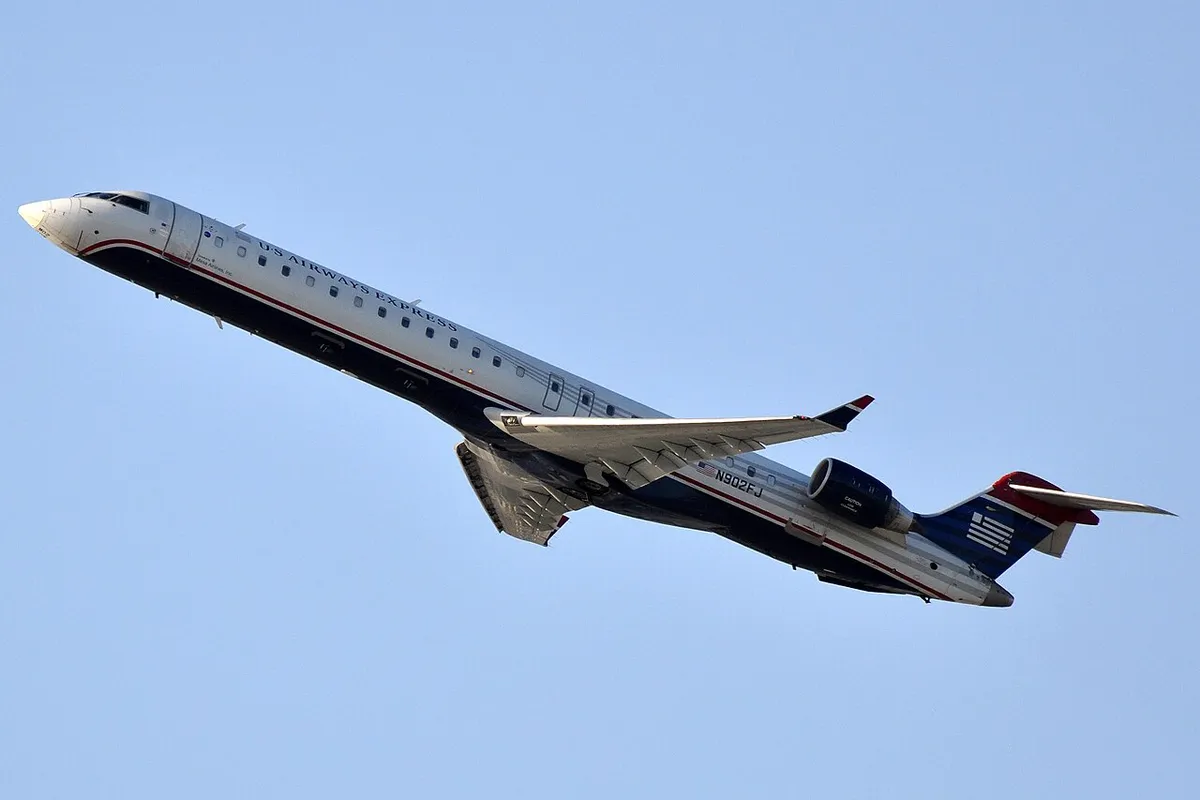
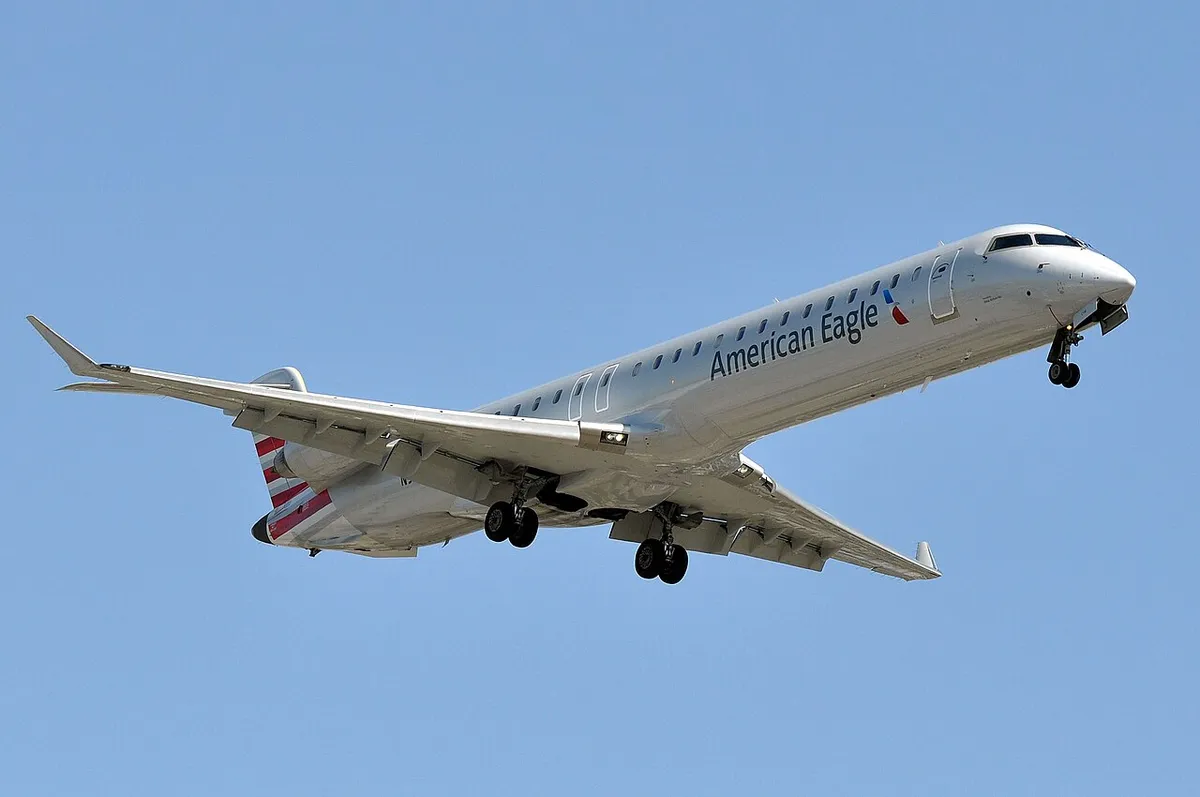
From below
The view you'll actually get from high overhead.
Field marks
- Engines mounted on the back of the body plus a T-shaped tail is the fastest way to separate any CRJ from an E-Jet, which has underwing engines and a low tail — the classic regional-jet split
- Small upturned wingtip blades, angled about 25 degrees, appear on most 700/900/1000s built after 2005; earlier CRJ700s and any CRJ200 instead show a plain tip
- Body length varies a lot across the family — a CRJ700 looks close to standard regional-jet proportions, while a CRJ1000 stretches noticeably longer
- Narrow, curved four-window cockpit glazing carries over unchanged from the CRJ200
Specs
- Length
- 36.20 m
- Wingspan
- 24.85 m
- Engines
- General Electric CF34-8C5 / CF34-8C5A1
- Typical seats
- 64–104
Size and shape, to scale
Photos can't hold a consistent scale from shot to shot — these silhouettes are all drawn at the same 10 px = 1 m scale, so the proportions here are trustworthy even though the photos above aren't.
Variant notes
- The CRJ900 (36.2 m, 24.9 m span) is the most numerous variant and the dominant type at North American regional carriers (Endeavor, PSA, SkyWest, GoJet)
- The CRJ700 (32.3 m) is the shortest and oldest of the three; many early-build CRJ700s kept the CRJ200-style straight wingtip blades before the 2005 NextGen wing revision
- The CRJ1000 (39.1 m, 104 seats) is the longest and rarest, flown mostly outside North America (Air Nostrum, SAS) — it adds a third overwing exit not found on the 700/900