Boeing
Boeing 737NG
Your answers

From below
The view you'll actually get from high overhead.
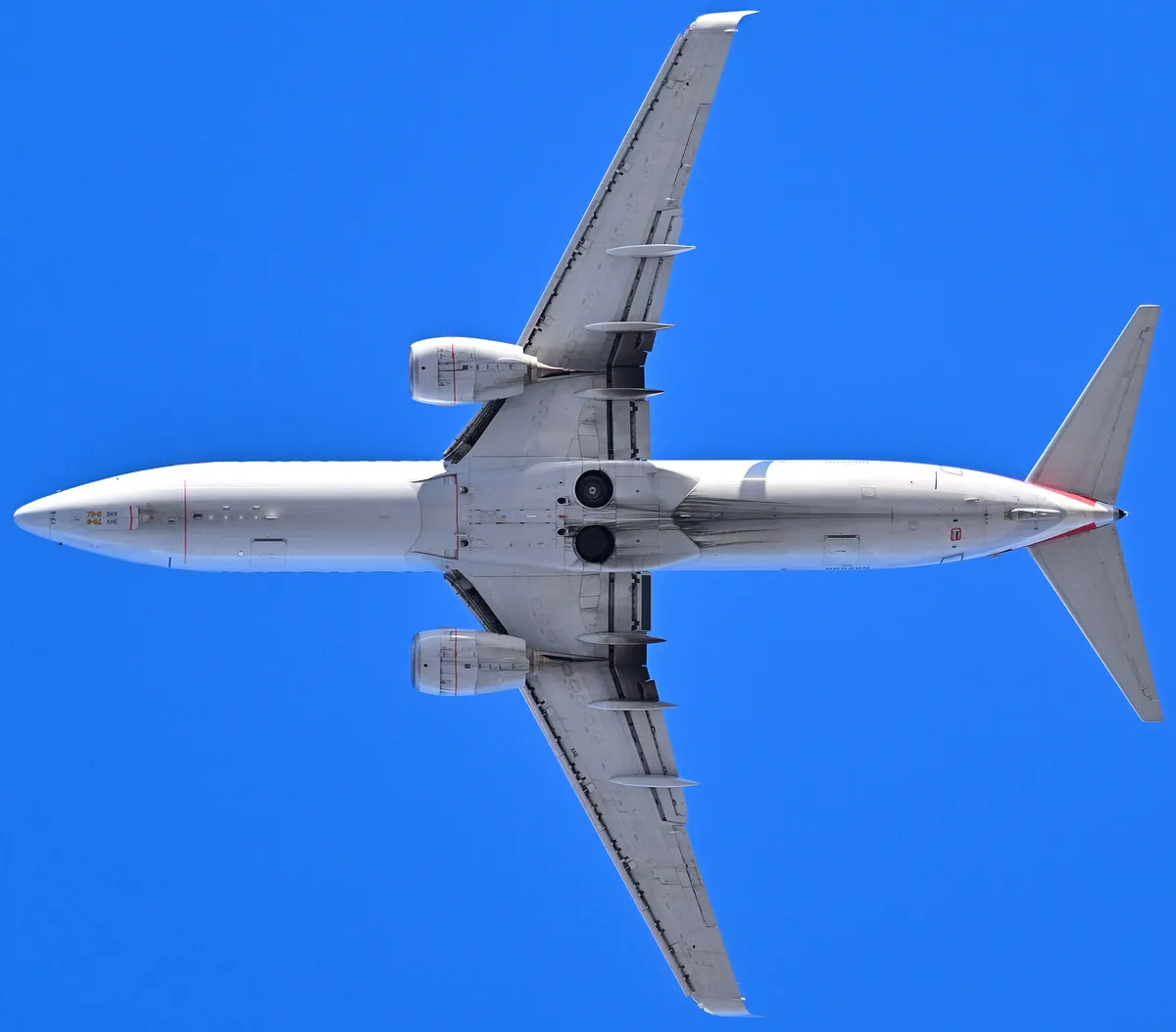
Field marks
- The engine pod is sliced flat on the bottom — the classic 737 tell, needed for ground clearance on its low-slung landing gear
- Angular cockpit windows with a sharp notch where the side window meets the windshield, unlike any Airbus
- A blended wingtip blade (spotters call this a "winglet") is the default; a split-blade tip (a "split scimitar" — blade plus small downward fin) marks a retrofit, and plain tips mark an early, unmodified aircraft
Specs
- Length
- 39.47 m
- Wingspan
- 35.80 m
- Engines
- CFM56-7B
- Typical seats
- 126–220
Size and shape, to scale
Photos can't hold a consistent scale from shot to shot — these silhouettes are all drawn at the same 10 px = 1 m scale, so the proportions here are trustworthy even though the photos above aren't.
Variant notes
- One entry spans the -700 (33.6 m), -800 (39.5 m), and -900/-900ER (42.1 m) — the -800 is by far the most common
- Upturned blended wingtip blades are standard on most in-service aircraft; many carriers (Southwest, Ryanair, United) have retrofitted split-blade tips (split scimitars)
- The world’s single most numerous narrowbody family currently flying
Commonly confused with
-

Boeing 737 MAX
Boeing
Serrated, saw-toothed trailing edge on the engine pod (spotters call this a "chevron") — no other 737 or A320-family jet has this
-

Airbus A320ceo
Airbus
Flat end-fins at the wingtip, not upturned blades, are the tell against any neo
-

Airbus A320neo
Airbus
Upturned wingtip blades plus visibly fat engine pods mark it as a neo