Bombardier
Bombardier CRJ200
Your answers
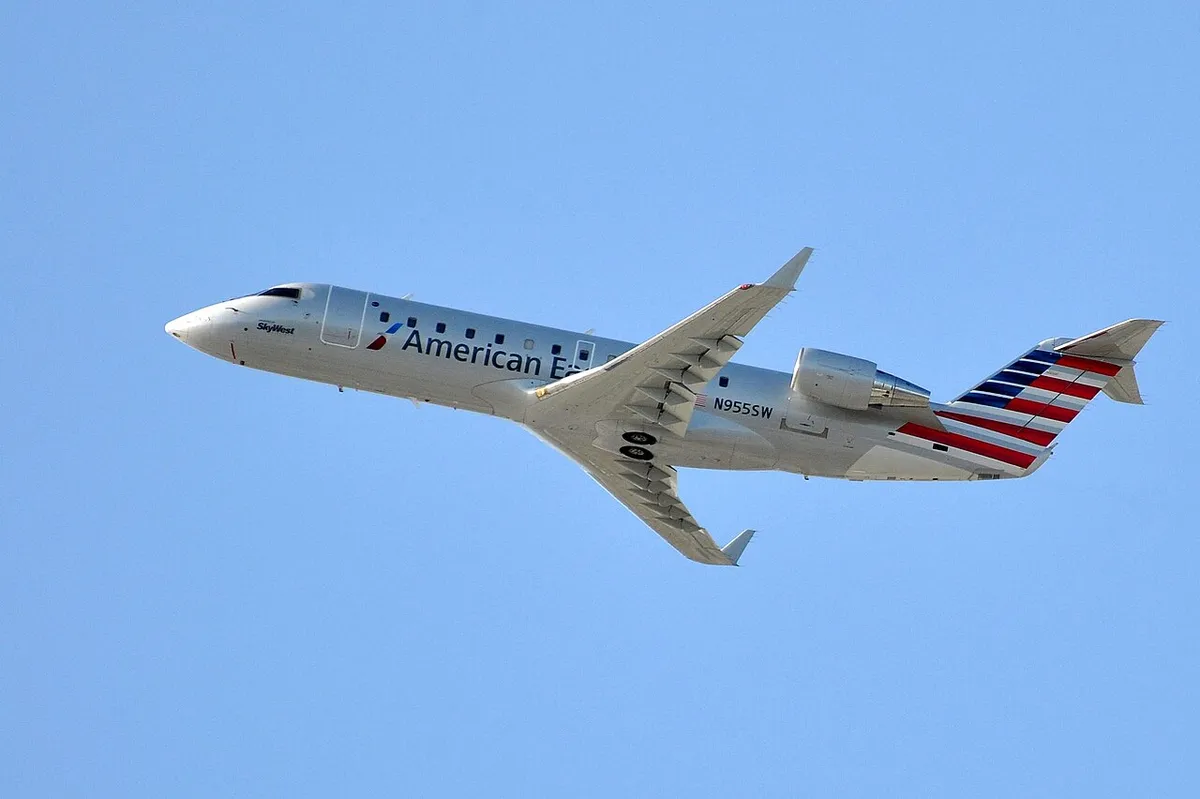
From below
The view you'll actually get from high overhead.
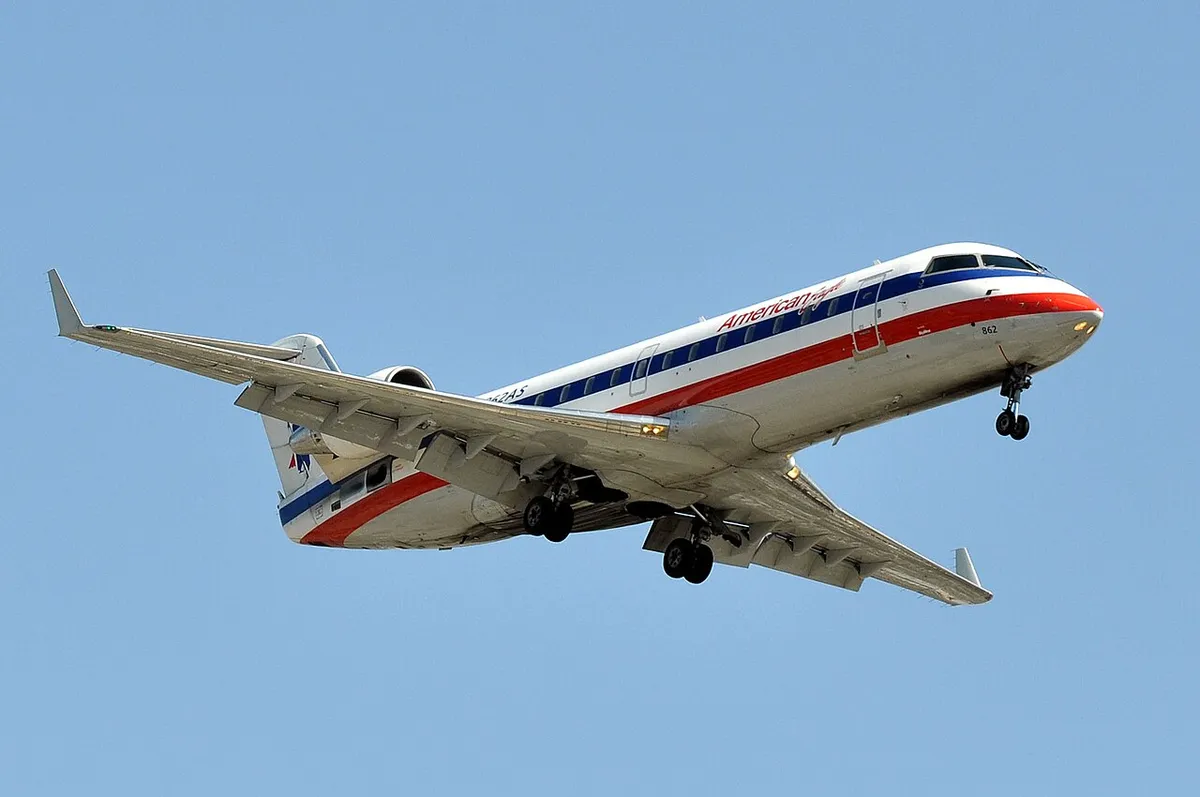
Field marks
- Engines on the back of the body plus a T-shaped tail separate it (and the ERJ145) from any E-Jet, which has underwing engines and a low tail
- The stubbiest body of any regional jet in this fleet — short and tightly coupled, with the tail sitting close behind the wing
- No upturned wingtip blade of any kind — a plain tip on a rear-engined, T-tailed regional jet points to this or an ERJ145, never a CRJ700/900/1000
- No visible exhaust pipe from the plane's small onboard generator (called the APU) at the tail, unlike the ERJ145
Specs
- Length
- 26.77 m
- Wingspan
- 21.21 m
- Engines
- General Electric CF34-3B1
- Typical seats
- 50
Size and shape, to scale
Photos can't hold a consistent scale from shot to shot — these silhouettes are all drawn at the same 10 px = 1 m scale, so the proportions here are trustworthy even though the photos above aren't.
Variant notes
- Derived from the Challenger 600 business jet — shares its body cross-section and nose shape
- Delta and American have fully retired it, but roughly 400+ still fly worldwide with SkyWest, Air Wisconsin (American Eagle), and international operators
- US scope-clause rules that once protected 50-seaters are fading, so surviving airframes skew toward smaller regional and charter operators