Airbus
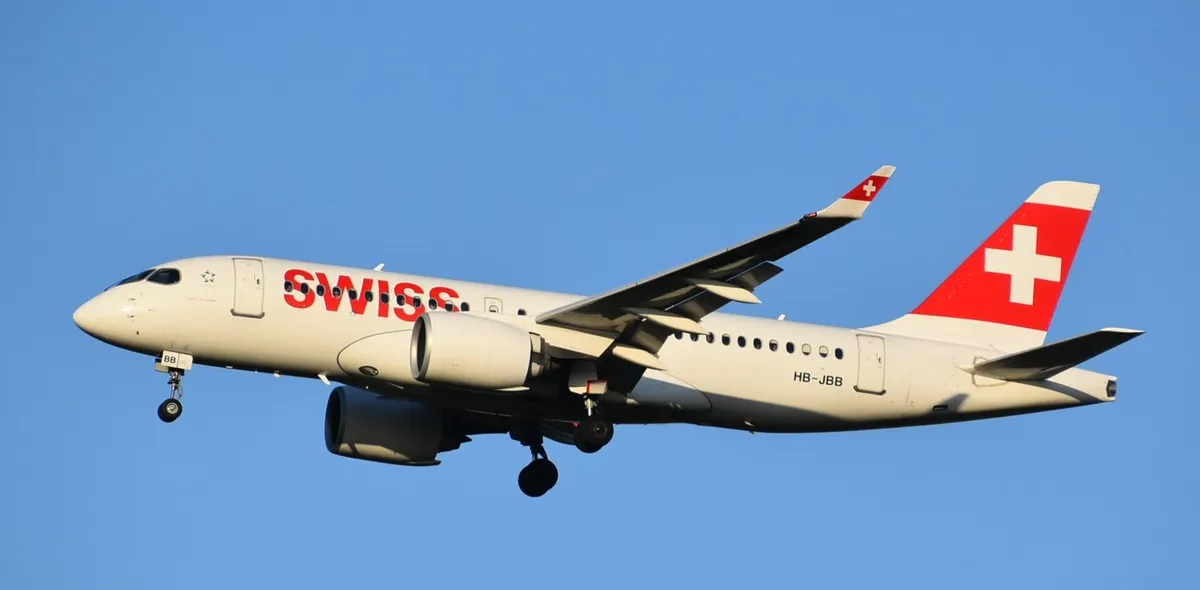
Airbus A220
Your answers
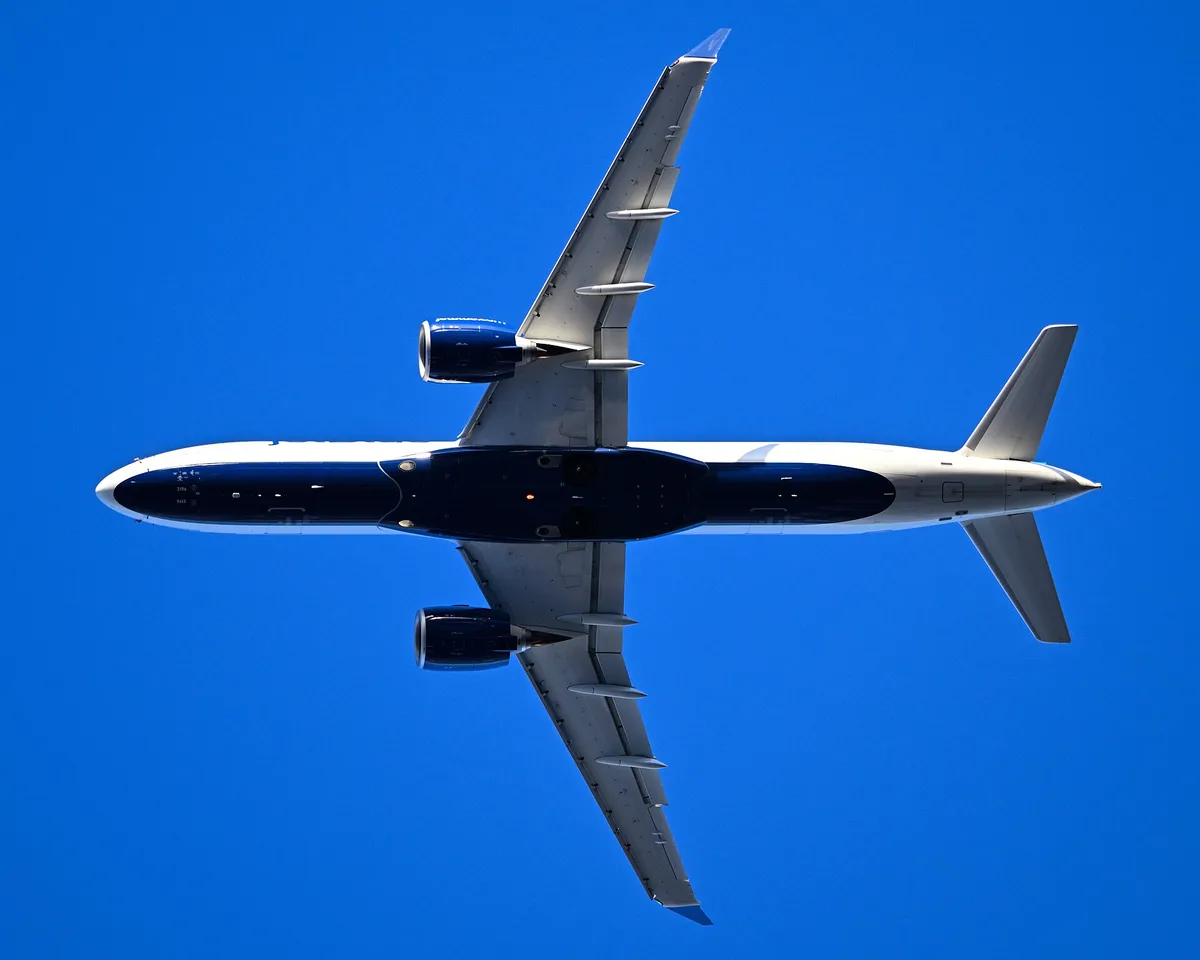
From below
The view you'll actually get from high overhead.
Field marks
- Curved wingtip blades blend smoothly into the wing — softer and less angled than an A320-family upturned blade (spotters call these "sharklets"), with no flat end-fins like an A320ceo
- Engine pods look oversized for such a slim body — the geared-turbofan PW1500G has an unusually large fan for the airframe
- Smoothly rounded, almost bug-eyed cockpit windows — no boxy notch like a 737
- Only two wheels on each main landing-gear leg despite the big engines, unlike the four-wheel clusters on a 757 or 767
Specs
- Length
- 38.70 m
- Wingspan
- 35.10 m
- Engines
- Pratt & Whitney PW1500G
- Typical seats
- 100–160
Size and shape, to scale
Photos can't hold a consistent scale from shot to shot — these silhouettes are all drawn at the same 10 px = 1 m scale, so the proportions here are trustworthy even though the photos above aren't.
Variant notes
- The -300 (38.7 m) makes up most of the in-service fleet — the -100 (35.0 m) is noticeably shorter but shares the same wing and tail
- Originally the Bombardier C Series before Airbus took majority ownership in 2018
- Delta and JetBlue are the largest North American operators
Commonly confused with
-
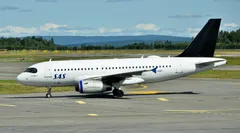
Airbus A319
Airbus
Small flat end-fins above and below the wingtip (spotters call these "fences") are the default — an upturned blade tip (a "sharklet") marks a rare neo or retrofit
-
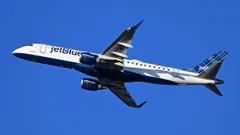
Embraer E190/E195
Embraer
Underwing engines and a low tail separate any E-Jet from a CRJ or ERJ, which have engines on the back of the body under a T-shaped tail