Embraer
Embraer E190/E195
Your answers
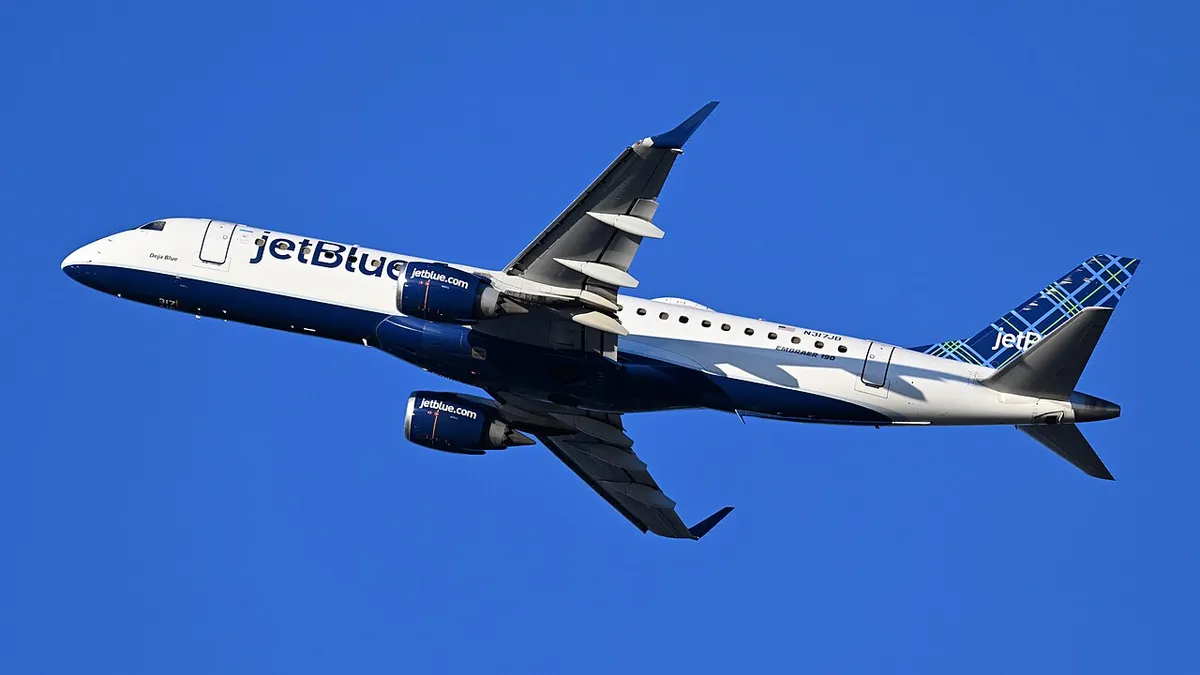
From below
The view you'll actually get from high overhead.
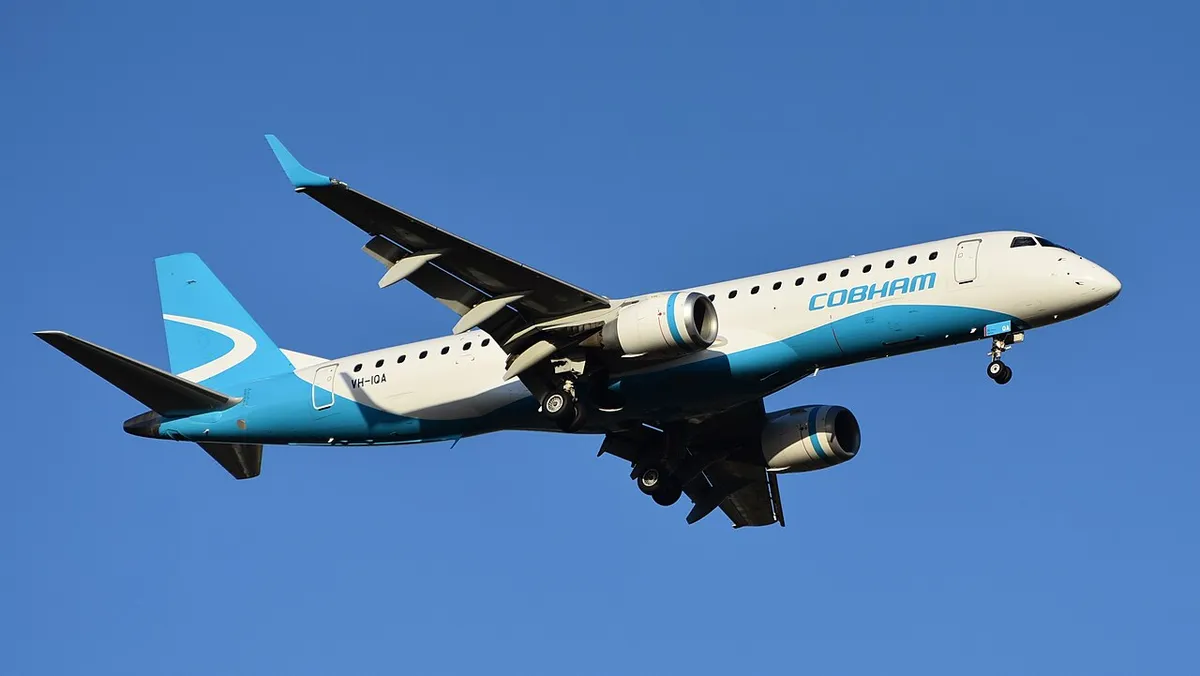
Field marks
- Underwing engines and a low tail separate any E-Jet from a CRJ or ERJ, which have engines on the back of the body under a T-shaped tail
- Squared-off, notched cockpit window corners are boxier than the smoothly rounded, bug-eyed windshield of the similarly sized A220
- Standard body proportions, longer and less stubby than an E170/E175, but the family resemblance (same nose, same wingtip-blade style) is unmistakable up close
- The E195-E2 wears a visibly larger swept-to-a-point wingtip instead of this generation's upturned blade — if the tip looks swept back rather than bent upward, it is the E2, not this E1 generation
Specs
- Length
- 36.24 m
- Wingspan
- 28.72 m
- Engines
- General Electric CF34-10E
- Typical seats
- 96–124
Size and shape, to scale
Photos can't hold a consistent scale from shot to shot — these silhouettes are all drawn at the same 10 px = 1 m scale, so the proportions here are trustworthy even though the photos above aren't.
Variant notes
- The E190 (36.24 m) is the more numerous of the two worldwide, flown by JetBlue, Austrian, LOT, Azul, and many others
- The E195 (38.65 m) shares the same wing and engines but stretches the body further, seating up to 124
- Larger overall than the E170/E175 — the wing, tail, and cabin cross-section are shared with those smaller siblings, but the body and wingspan grow
Commonly confused with
-

Airbus A220
Airbus
Curved wingtip blades blend smoothly into the wing — softer and less angled than an A320-family upturned blade (spotters call these "sharklets"), with no flat end-fins like an A320ceo
-
Embraer E-Jet E2 (E190-E2/E195-E2)
Embraer
Underwing engines and a low tail separate any E-Jet from a CRJ or ERJ, which have engines on the back of the body under a T-shaped tail