Boeing
Boeing 757
Your answers

From below
The view you'll actually get from high overhead.
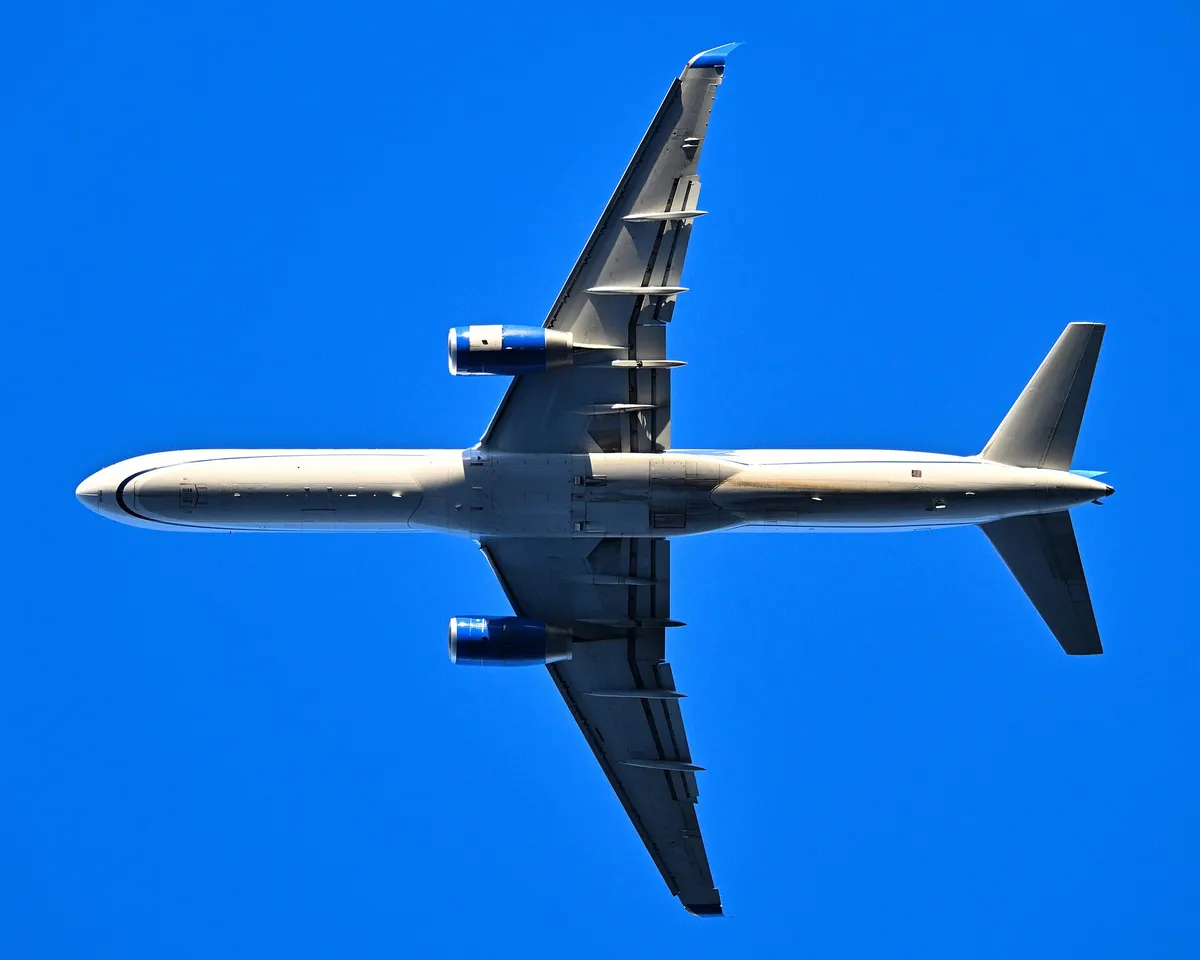
Field marks
- Long, slender, "stretched" body on a comparatively narrow, short wing — looks pulled taut compared to any A320-family jet
- Distinctly tall landing gear stance keeps the underslung engines off the ground on this narrow-body
- Four wheels on each main landing-gear leg — no other narrow-body in this fleet has more than two
- Pointed, needle-like nose profile, sharper than the A320 family
Specs
- Length
- 47.32 m
- Wingspan
- 38.05 m
- Engines
- Rolls-Royce RB211 / Pratt & Whitney PW2000
- Typical seats
- 178–214
Size and shape, to scale
Photos can't hold a consistent scale from shot to shot — these silhouettes are all drawn at the same 10 px = 1 m scale, so the proportions here are trustworthy even though the photos above aren't.
Variant notes
- The 757-200 dominates the surviving fleet; the stretched 757-300 (54.4 m) is rare, mostly with Delta and United
- Roughly evenly split between blended upturned-blade wingtip retrofits (FAA-approved since 2005) and unmodified plain tips
- No split-blade tip ("split scimitar") was ever certified or offered for the 757 — the blended upturned blade remains the only retrofit option
Commonly confused with
-
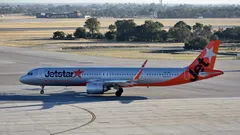
Airbus A321neo
Airbus
Upturned wingtip blades plus a visibly stretched body separate it from an A320neo
-
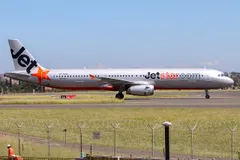
Airbus A321ceo
Airbus
Four overwing exits (two pairs) instead of the A320's two are the length tell up close
-

Boeing 767
Boeing
The narrowest true widebody flying — noticeably fatter cross-section than a 757 but visibly slimmer than an A330 or 777