Boeing
Boeing 767
Your answers
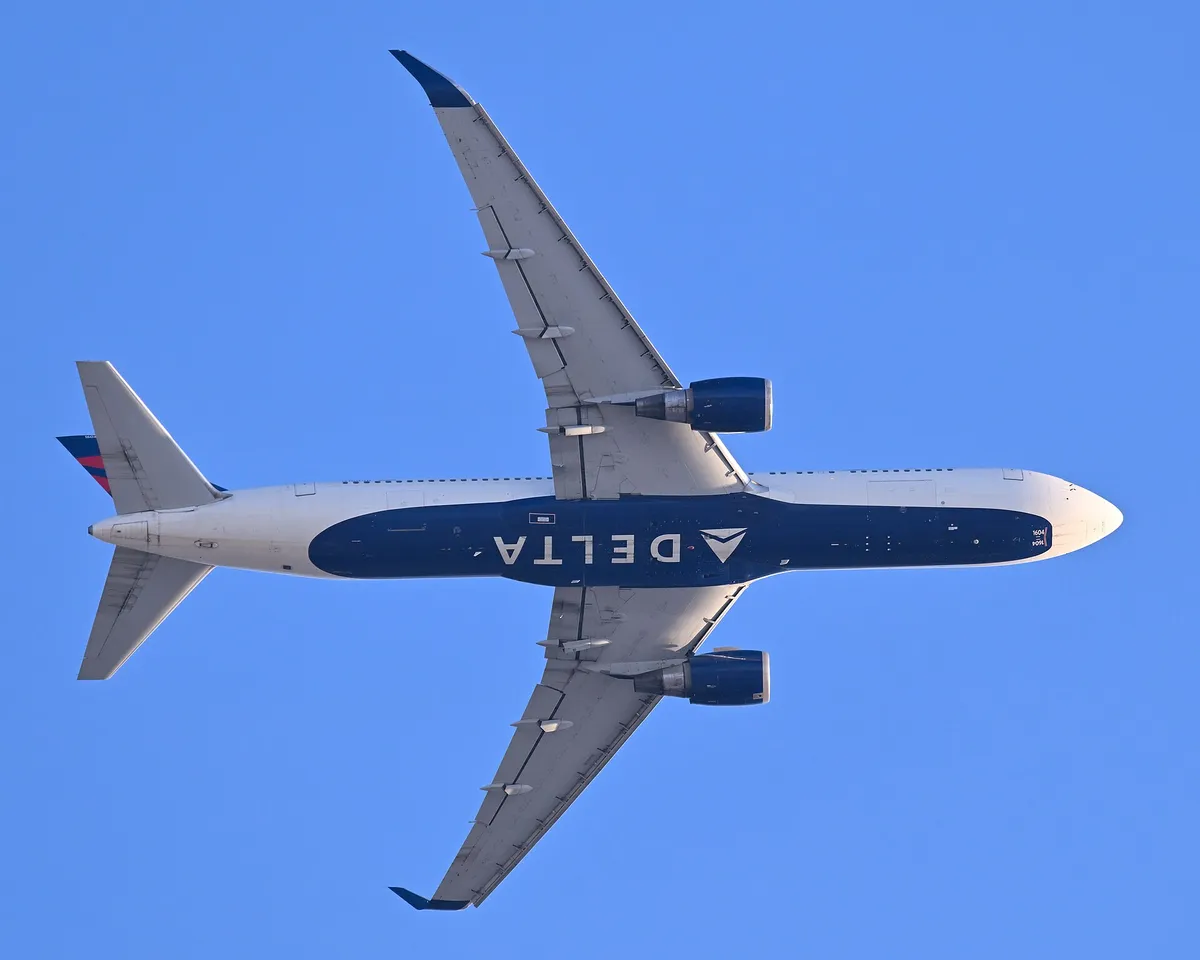
From below
The view you'll actually get from high overhead.
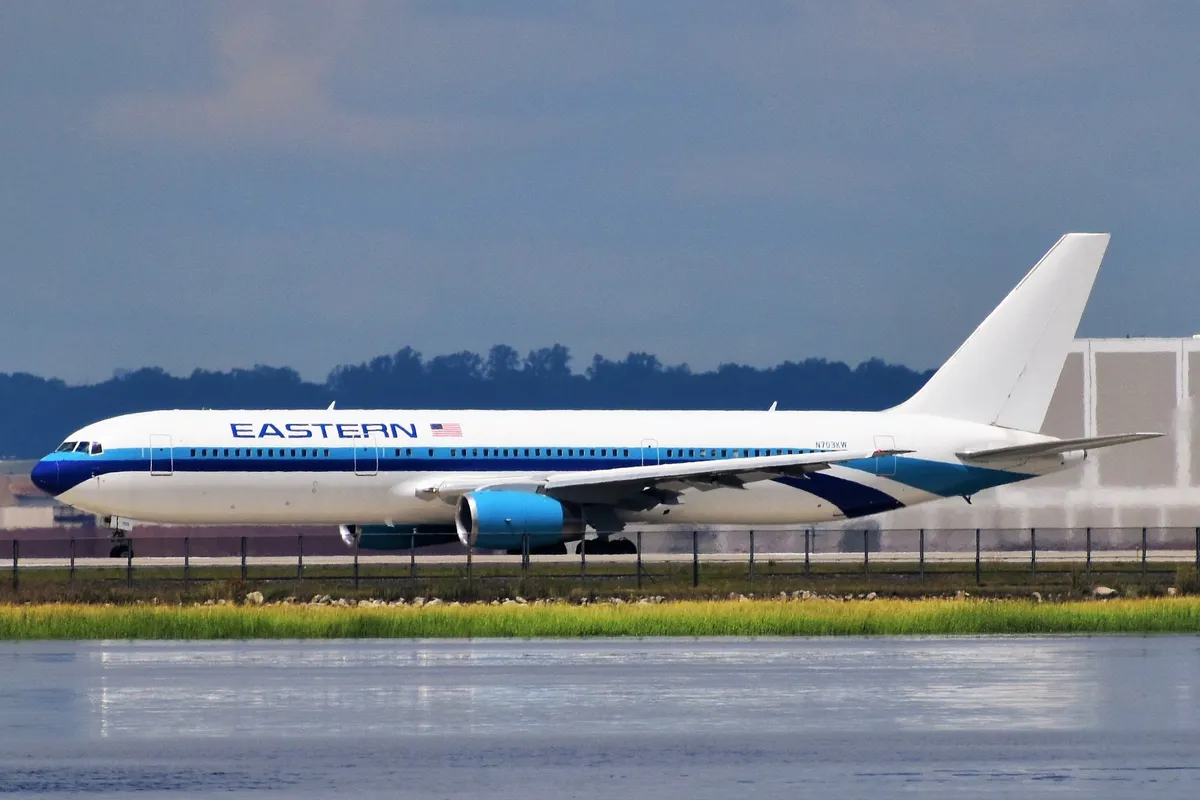
Field marks
- The narrowest true widebody flying — noticeably fatter cross-section than a 757 but visibly slimmer than an A330 or 777
- Four wheels on each main landing-gear leg, same count as an A330 or 747, but the two-aisle-yet-slim body tells it apart from both
- Plain wingtips on most airframes — an upturned blade tip does not rule it out, since retrofits are common but not universal
- A large share of what is flying today are windowless freighters — check for a visible cargo door and no cabin windows
Specs
- Length
- 54.94 m
- Wingspan
- 47.57 m
- Engines
- General Electric CF6-80C2 / Pratt & Whitney PW4000 / Rolls-Royce RB211-524
- Typical seats
- 181–269
Size and shape, to scale
Photos can't hold a consistent scale from shot to shot — these silhouettes are all drawn at the same 10 px = 1 m scale, so the proportions here are trustworthy even though the photos above aren't.
Variant notes
- The stretched -300ER dominates the surviving fleet; the shorter original -200 is comparatively rare
- A large active freighter population (FedEx, UPS, DHL, Amazon Air) keeps the 767 common in the sky even as passenger retirements continue
- Aviation Partners blended upturned wingtip blades were retrofitted on many -300ERs (Delta, American, JAL, plus FedEx/UPS freighters) starting 2009, but most airframes worldwide still fly plain tips