Boeing
Boeing 777-300
Your answers

From below
The view you'll actually get from high overhead.
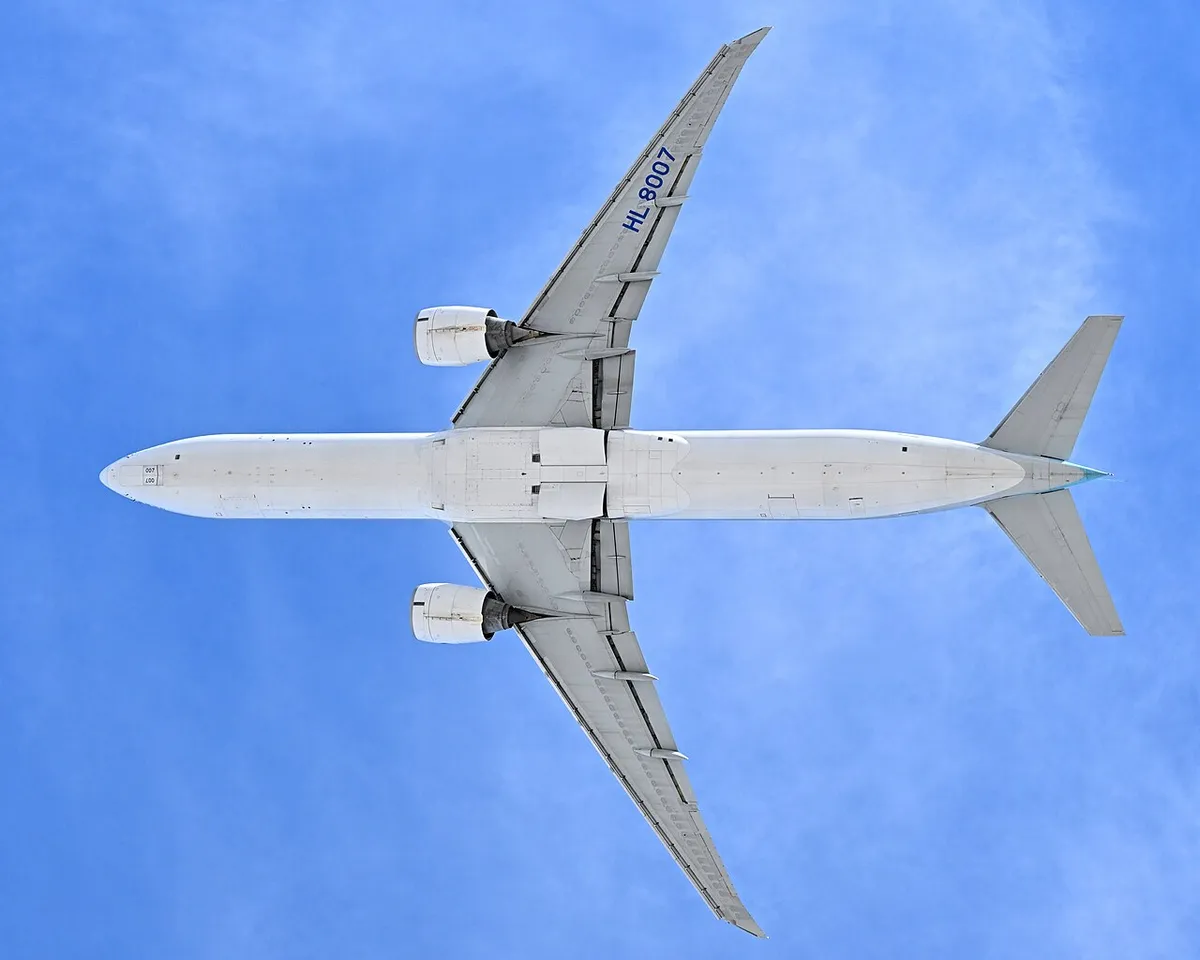
Field marks
- Longest 777 body, with a visibly long tail cone stretching well behind the wing
- Six wheels on each main landing-gear leg, shared with every 777 and the A350-1000 — split those two by engine-pod shape (smooth here) and cockpit window shape (angular with a notch here vs. raccoon mask on the A350)
- Swept-to-a-point wingtips on essentially every airframe still flying
- Among the largest engine pods of any twin-engine jet — the GE90-115B is the largest jet engine ever built
Specs
- Length
- 73.86 m
- Wingspan
- 64.80 m
- Engines
- General Electric GE90-115B
- Typical seats
- 365–396
Size and shape, to scale
Photos can't hold a consistent scale from shot to shot — these silhouettes are all drawn at the same 10 px = 1 m scale, so the proportions here are trustworthy even though the photos above aren't.
Variant notes
- The extended-range -300ER (GE90-115B, swept-to-a-point wingtips) is by far the dominant sub-variant; the original non-ER -300 is essentially retired
- One of the most-produced widebodies ever built — a common long-haul workhorse worldwide
- Swept-to-a-point, extended wingtips are standard on the entire surviving -300ER fleet